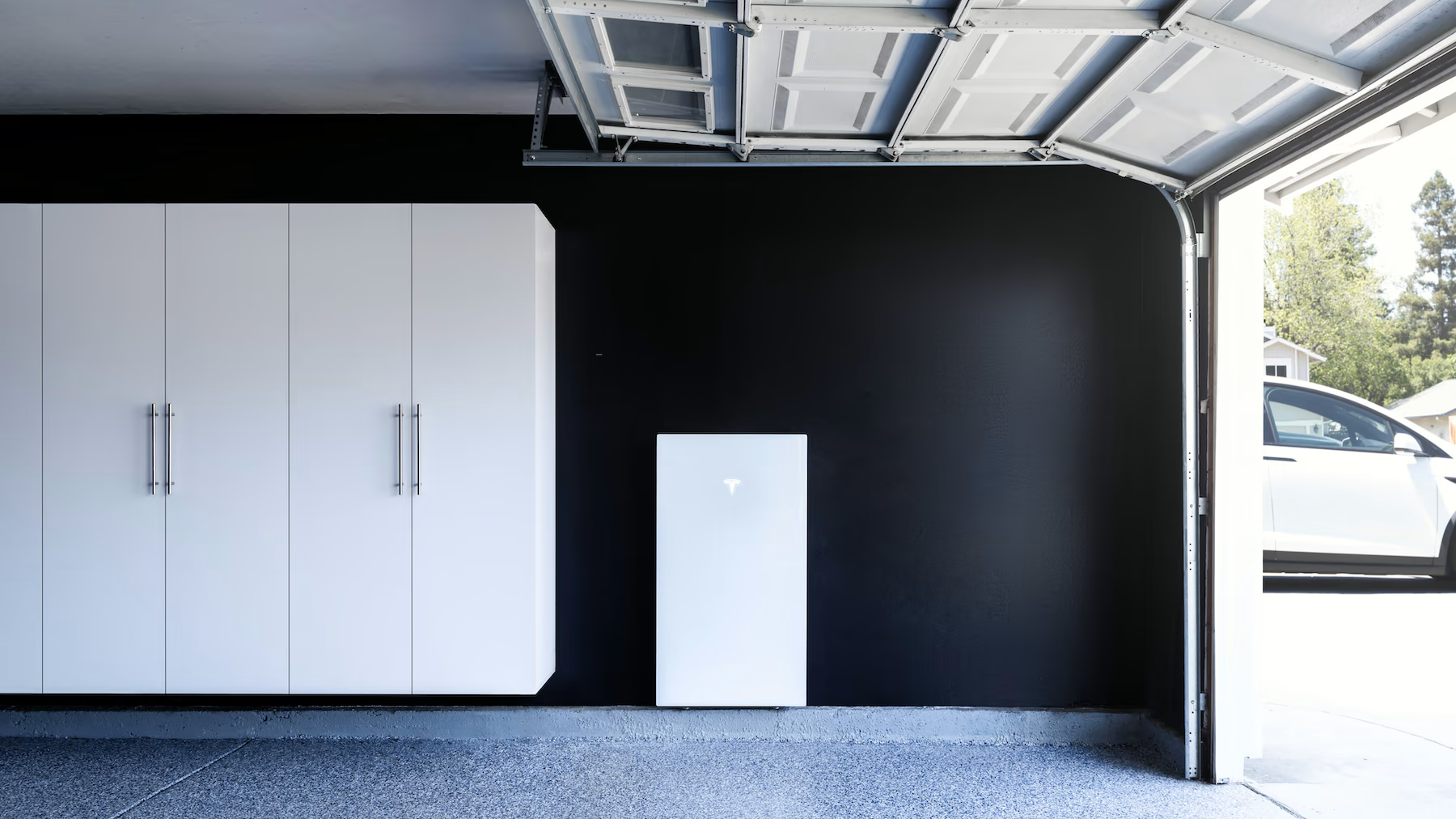
Solar and battery technology continues to evolve, with newer systems bringing solar generation, battery storage, energy management and electric vehicle (EV) charging closer together.
One manufacturer taking this integrated approach is Sigenergy, with products including its SigenStor energy storage platform and SigenMicro microinverter range.
But what makes these products different, and what should Australian homeowners know before considering them?
What is Sigenergy?
Sigenergy develops technology for solar generation, battery storage, energy management and EV charging.
Its SigenStor platform is designed to bring several energy functions together in one coordinated system. SigenMicro takes a different approach to solar generation, using microinverters to manage electricity conversion at the solar module level.
Both technologies reflect a broader shift towards more connected home energy systems. However, the best solution for a property still depends on its roof layout, electricity use, budget and future energy plans.
SigenStor: An integrated home energy system
SigenStor combines several components within one energy storage platform, including a solar inverter, battery storage, battery power conversion and energy management. An EV DC charging module is also available within the product ecosystem, depending on the configuration.
The system uses a modular design, allowing battery capacity to be configured around the installation.
For homeowners, the appeal is having different parts of the energy system designed to work together rather than sourcing every component separately.
Battery-level optimisation
One of SigenStor’s notable technical features is the use of DC-DC conversion within its battery modules.
According to Sigenergy’s product information, this allows battery packs to operate in parallel and supports flexibility when configuring the storage system. The manufacturer also describes support for mixing certain battery packs with different ages and states of charge or health, subject to system compatibility and its specifications.
In practical terms, this technology is designed to help manage the battery modules as part of a coordinated system.
It is an interesting development in battery design, although homeowners should still compare usable capacity, charge and discharge power, warranty conditions and the overall installed cost before choosing a system.
Source: Sigenergy – SigenStor
What is SigenMicro?
SigenMicro is Sigenergy’s microinverter technology.
In a conventional string inverter system, multiple solar panels are connected to a central inverter. A microinverter system instead converts the electricity from individual solar modules, or small groups of modules depending on the model.
Sigenergy’s technical documentation describes SigenMicro models with nominal output ratings of 400 W, 500 W, 800 W and 1,000 W. The models differ in their input configuration, so the exact specification matters when comparing systems.
Source: Sigenergy – SigenMicro technical specifications
When might microinverters be useful?
Australian homes don’t always have simple roof layouts. Some properties have multiple roof orientations, different pitches or areas affected by shading at different times of the day.
Microinverters can provide panel-level monitoring and may offer advantages where individual panels receive different amounts of sunlight.
However, microinverters aren’t automatically the best option for every home. A well-designed string inverter system can also perform effectively. The right choice depends on the roof, shading, equipment specifications and installation costs.
If you’re comparing options, ask your installer to explain the practical benefits for your particular property rather than relying on general claims about one technology being superior.
Important: Confirm the Australian availability and approval status of the exact SigenMicro model being proposed. Product specifications and approvals can vary by model and change over time.
EV charging and the future of home energy
Another feature of Sigenergy’s product ecosystem is its Sigen EV DC Charging Module.
The manufacturer’s specifications list charging and discharging power options of up to 12.5 kW and 25 kW, depending on the module. The equipment uses a CCS2 connection and is designed to integrate with the broader SigenStor system.
This is particularly relevant as more households consider combining rooftop solar, home batteries and electric vehicles.
Sigenergy also promotes vehicle-to-everything (V2X) capabilities, which can allow compatible vehicles to supply energy to a home or the electricity grid. However, V2X functionality depends on vehicle compatibility, system configuration and applicable technical requirements. It should not be assumed that every EV can provide backup power through the system today.
If EV charging is important to your household, ask your installer to confirm the supported vehicle models, available functionality and any additional equipment required.
Source: Sigenergy – Sigen EV DC Charging Module
Is Sigenergy suitable for every home?
Not necessarily. The technology may suit households looking for an integrated solar and battery system, but choosing a brand should only be one part of the decision.
Before comparing a Sigenergy system with other options, consider:
- Roof layout and shading: These affect the suitability of different inverter technologies.
- Electricity usage: Your daytime and evening consumption will influence the solar and battery capacity you need.
- Backup requirements: If blackout protection matters, confirm which circuits can be backed up and how the system must be configured.
- Future EV plans: Consider whether EV charging is a realistic near-term requirement or simply an optional feature.
- Expansion options: Check which additional battery modules or components can be added later.
- Warranty and support: Understand the warranty conditions and who will help if the system needs servicing.
- Total installed cost: Compare the complete system rather than individual product prices.
An integrated system can be appealing, but it is only worthwhile if the features provide genuine value for your household.
Check Australian product approvals before installation
Before purchasing any solar inverter or battery, check the exact product models against the relevant Australian requirements.
The Clean Energy Council maintains lists of approved solar panels, inverters and batteries. Listings can change, and approval should not be assumed simply because another product from the same manufacturer is listed.
Check the Clean Energy Council’s approved product information and ask your installer to confirm the models specified in your quote.
It’s also worth checking whether the proposed system meets the current requirements for any government incentive you intend to claim.
If you’re considering battery storage, our guide to solar battery rebates and incentives in NSW explains the main programs and eligibility considerations.
For a broader overview of modern inverters, batteries and monitoring, read our guide to solar technology in 2026.
And if you’re still weighing up the value of installing solar, see Is Solar Still Worth It in 2026?.
Why is Sigenergy worth watching in 2026?
Sigenergy is one example of the move towards connected home energy systems.
SigenStor combines solar conversion, battery storage and energy management in a modular platform, while SigenMicro offers a different approach to converting and monitoring solar generation at module level. Its EV charging technology also reflects the growing interest in coordinating solar, batteries and electric vehicles.
For homeowners, the key question isn’t which system has the longest feature list. It’s whether the technology is suitable for the property, correctly designed and supported in Australia.
Considering solar or battery storage? Zeneco Energy can help you explore the available options and understand which system may suit your home’s energy needs.
Frequently asked questions
What is SigenStor?
SigenStor is Sigenergy’s integrated energy storage platform, combining solar conversion, battery storage and energy management, with EV DC charging available through a compatible module.
What is SigenMicro?
SigenMicro is Sigenergy’s microinverter range, designed to provide solar conversion and monitoring at the module level. Suitability depends on the roof layout, system design and specific model.
How does SigenStor’s battery optimisation work?
Sigenergy uses DC-DC conversion within its battery modules. The manufacturer says this supports parallel battery-pack operation and flexibility when configuring compatible modules.
Is SigenMicro the same as a solar optimiser?
No. SigenMicro is a microinverter, which converts solar electricity at the module level. A standalone DC optimiser performs a different function and is generally used with a compatible central inverter.
Can Sigenergy charge an electric vehicle?
Sigenergy offers an EV DC Charging Module with a CCS2 connection. The available charging power depends on the module, and vehicle compatibility should be confirmed before installation.
Can a Sigenergy system power my home during a blackout?
Backup capability depends on the selected equipment, installation design and configuration. Ask your installer which circuits will be supported and whether the system can meet your essential power requirements during an outage.
Are Sigenergy products approved in Australia?
Approval is model-specific and may change. Check the exact inverter and battery models against the current Australian approved product lists and confirm eligibility with your installer.
Sources and further reading
- Sigenergy – SigenStor
- Sigenergy – SigenMicro technical specifications
- Sigenergy – Sigen EV DC Charging Module
- Clean Energy Council – Approved Products
- Australian Government – Cheaper Home Batteries Program
Disclaimer: This article provides general information only and is not a product recommendation. Product specifications, Australian availability, approvals, incentive eligibility and supported features may change. Confirm the exact products and configuration with the manufacturer and installer before making a purchasing decision.